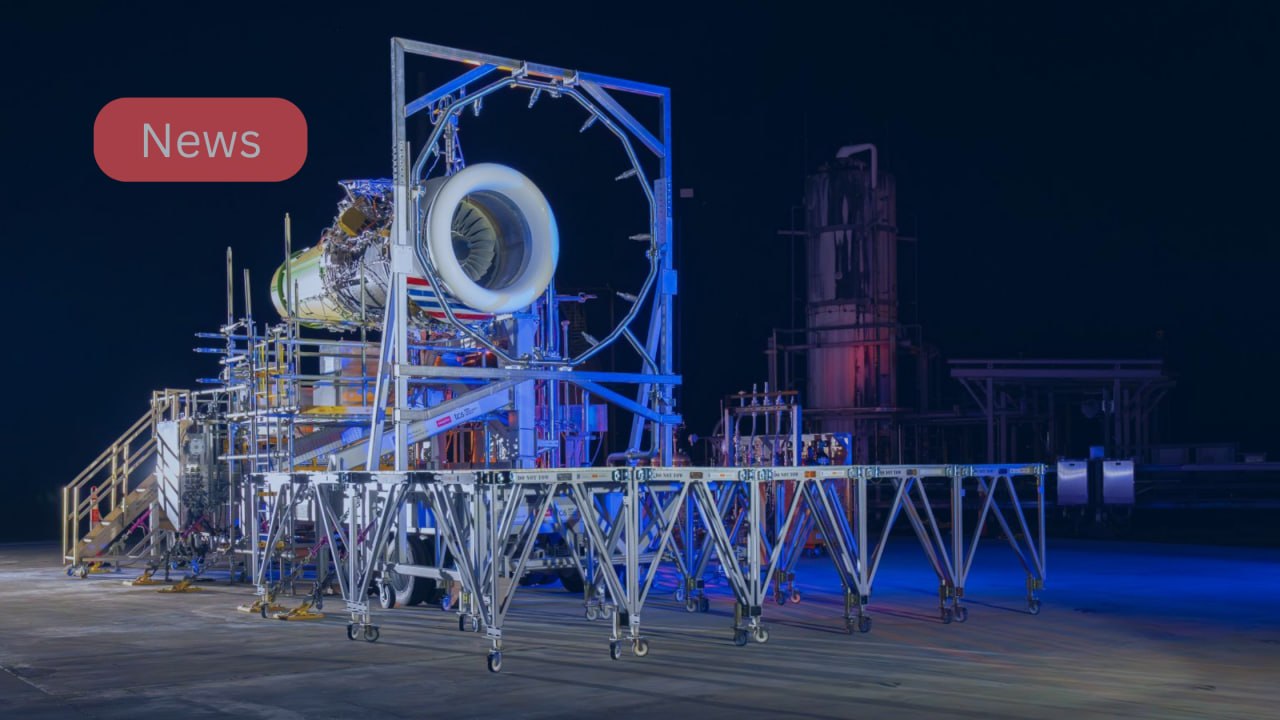

The Rolls-Royce hydrogen aviation strategy remains active as the company continues investing in alternative propulsion technology while promoting the strong operational performance of its Pearl engine family.
According to reporting from FlightGlobal, Rolls-Royce executives reaffirmed their long-term interest in hydrogen-powered aviation despite the industry’s current focus on sustainable aviation fuel (SAF) and efficiency upgrades.
The report comes shortly after Rolls-Royce Holdings and easyJet completed a major hydrogen combustion engine test using a modified Pearl 15 engine at NASA’s Stennis Space Center in the United States.
Rolls-Royce Continues Hydrogen Aviation Development
Hydrogen propulsion has become one of several technologies being explored to help aviation reduce carbon emissions and meet long-term net-zero goals.
Rolls-Royce stated that hydrogen could support future short- and medium-range aircraft markets if infrastructure and certification challenges are resolved. The company continues to study hydrogen combustion systems alongside SAF-compatible gas turbines.
Recent testing milestones strengthened the credibility of Rolls-Royce’s hydrogen aviation strategy.
Key Hydrogen Testing Milestones
- 2022: Rolls-Royce and easyJet tested an AE2100 engine using green hydrogen in the UK.
- 2023: Hydrogen combustor testing expanded in partnership with research institutions.
- 2026: A modified Pearl 15 engine completed a simulated full-flight cycle on 100% hydrogen at NASA Stennis.
The latest testing campaign demonstrated:
- full take-off power capability,
- simulated cruise operations,
- start-up and landing procedures,
- fault-condition testing.
Industry analysts view the achievement as technically significant because modern jet engines face extreme thermal and combustion stability requirements.
Pearl Engine Family Continues Strong Performance
While pursuing future propulsion concepts, Rolls-Royce also emphasized the operational success of its Pearl engine family used in business aviation.
The Pearl series powers aircraft including:
- Bombardier Global 5500,
- Bombardier Global 6500,
- Gulfstream platforms,
- Dassault Falcon programs.
The engine family incorporates:
- advanced compressor systems,
- low-emissions combustors,
- improved fuel efficiency,
- reduced noise profiles.
Rolls-Royce has positioned the Pearl platform as both a commercially successful engine line and a potential technology bridge toward future low-emission propulsion systems.
Hydrogen Aviation Faces Major Industry Challenges
Despite recent progress, hydrogen aviation still faces major barriers before commercial deployment becomes viable.
Infrastructure Constraints
Hydrogen requires specialized storage and airport fueling systems due to:
- extremely low storage temperatures,
- higher fuel volume requirements,
- leak management complexity.
According to Rolls-Royce research, a limited number of major airport hydrogen hubs could initially deliver most operational benefits.
Certification and Regulation
Hydrogen-powered aircraft must satisfy strict international safety standards governed by:
- International Civil Aviation Organization,
- national aviation regulators,
- aircraft certification authorities.
Certification pathways for hydrogen combustion engines remain under development across the aviation sector.
Competition From SAF
Many airlines currently prioritize Sustainable Aviation Fuel because:
- existing aircraft can already use SAF blends,
- infrastructure changes are smaller,
- certification pathways are clearer.
As a result, most analysts believe SAF will dominate near-term aviation decarbonization while hydrogen remains a longer-term solution.
Industry Outlook for Sustainable Aviation
The aviation industry continues pursuing multiple pathways toward lower emissions.
Current approaches include:
- Sustainable Aviation Fuel adoption,
- engine efficiency improvements,
- hybrid-electric propulsion,
- hydrogen combustion,
- hydrogen fuel-cell systems.
Rolls-Royce has stated that hydrogen will likely complement rather than replace SAF technologies in the coming decades.
Airlines, manufacturers, and regulators remain cautious because large-scale hydrogen adoption depends on:
- renewable hydrogen production,
- airport infrastructure investment,
- aircraft redesign,
- global certification alignment.
What’s Next for Rolls-Royce Hydrogen Aviation?
Industry observers expect Rolls-Royce to continue:
- hydrogen combustion testing,
- fuel-system integration studies,
- narrowbody propulsion research,
- partnerships with airlines and research agencies.
The company’s recent Pearl 15 hydrogen tests represent an important technical milestone, but commercial hydrogen passenger aircraft are still likely years away from widespread deployment.
For now, Rolls-Royce appears focused on balancing near-term engine efficiency gains with long-term hydrogen aviation research.
Sources







