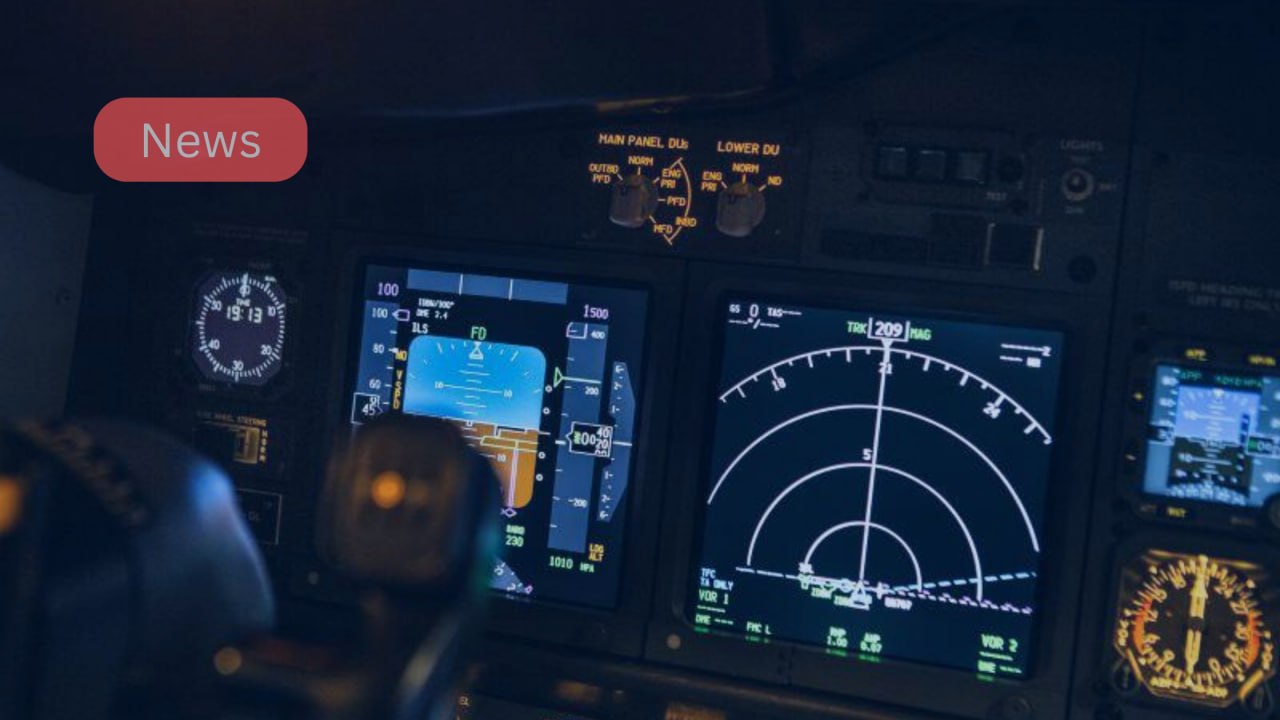

The Federal Aviation Administration signed a final airworthiness rule establishing strict performance standards for radar altimeters across U.S. airspace. According to reporting by Aviation Week Network, the new regulation targets potential wireless signal interference as telecom operators expand 5G operations into the Upper C-band spectrum.
Under the updated framework, airlines and aircraft owners must retrofit legacy equipment with next-generation units capable of filtering out adjacent 5G signals. The FAA radio altimeter upgrade mandate establishes a two-tiered compliance timeline designed to prevent operational disruptions during low-visibility instrument landings.
Dual Compliance Timelines for Commercial and General Aviation
The Federal Aviation Administration rule splits aircraft operators into two distinct compliance windows based on operational category and fleet size:
- December 30, 2030 Deadline: Scheduled commercial air carriers operating under Part 121 and foreign commercial airliners (Part 129) carrying over 30 passengers or 7,500 lbs payload.
- October 31, 2034 Deadline: On-demand charter operators (Part 135), general aviation (Part 91), and remaining commercial operations (Parts 125, 133, 136, 137).
The regulatory framework applies specifically to flights within the contiguous United States and Washington, D.C. Operations restricted entirely to Alaska, Hawaii, Puerto Rico, or foreign territories remain exempt unless those aircraft enter covered mainland airspace.
Understanding 5G Aviation Spectrum Interference
Radio altimeters measure height above terrain by sending radio signals from the aircraft fuselage to the ground in the 4.2–4.4 GHz frequency band. Automated flight systems rely on these continuous altitude readings during critical flight phases.
The Federal Communications Commission recently released 160 MHz of adjacent spectrum in the 3.98–4.2 GHz Upper C-band for high-power wireless services. Because older radio altimeter receivers lack sufficient filtering capability, nearby 5G cell towers could inadvertently corrupt altitude readings.
Flawed altimeter data poses direct risks to safety-critical avionics systems, including:
- Automatic landing systems (Autoland)
- Terrain Awareness and Warning Systems (TAWS / GPWS)
- Automatic spoiler deployment and autothrottles
- Windshear detection and flight guidance controls
Fleet Retrofit Costs and Economic Impact
Addressing 5G aviation spectrum interference represents a massive capital commitment for global operators. FAA economic assessments project total nationwide compliance costs between $4.5 billion and $7.13 billion across roughly 58,500 installed altimeter units.
- Airplane Hardware & Installation: Estimated at $80,000 to $120,000 per altimeter unit.
- Rotorcraft Retrofit Cost: Estimated at approximately $40,000 per unit.
- Part 135 Fleet Impact: Projected total costs between $675 million and $970 million.
To lessen the financial strain, the FCC created a wireless-funded rebate program. Auction winners for the new Upper C-band spectrum will fund reimbursements for eligible domestic operators. Foreign air carriers operating into U.S. gateways will not qualify for these domestic rebates, requiring international airlines to bear full airline fleet retrofit costs independently.
Industry Outlook: Navigating Supply Chains and Avionics Capacity
As wireless carriers prepare to activate new C-band towers in major metropolitan markets by late 2030, airlines face a four-year window to secure hardware and schedule depot maintenance.
Avionics manufacturers, including Honeywell, Collins Aerospace, and Thales, have accelerated production of high-rejection radar altimeters and external radio frequency filters. However, maintenance facilities warn that scheduling thousands of aircraft retrofits alongside routine heavy maintenance checks will require meticulous fleet management.
Airlines that fail to meet the December 2030 deadline risk strict operational limitations, including bans on conducting Category II and Category III low-visibility instrument approaches at major U.S. hubs.







