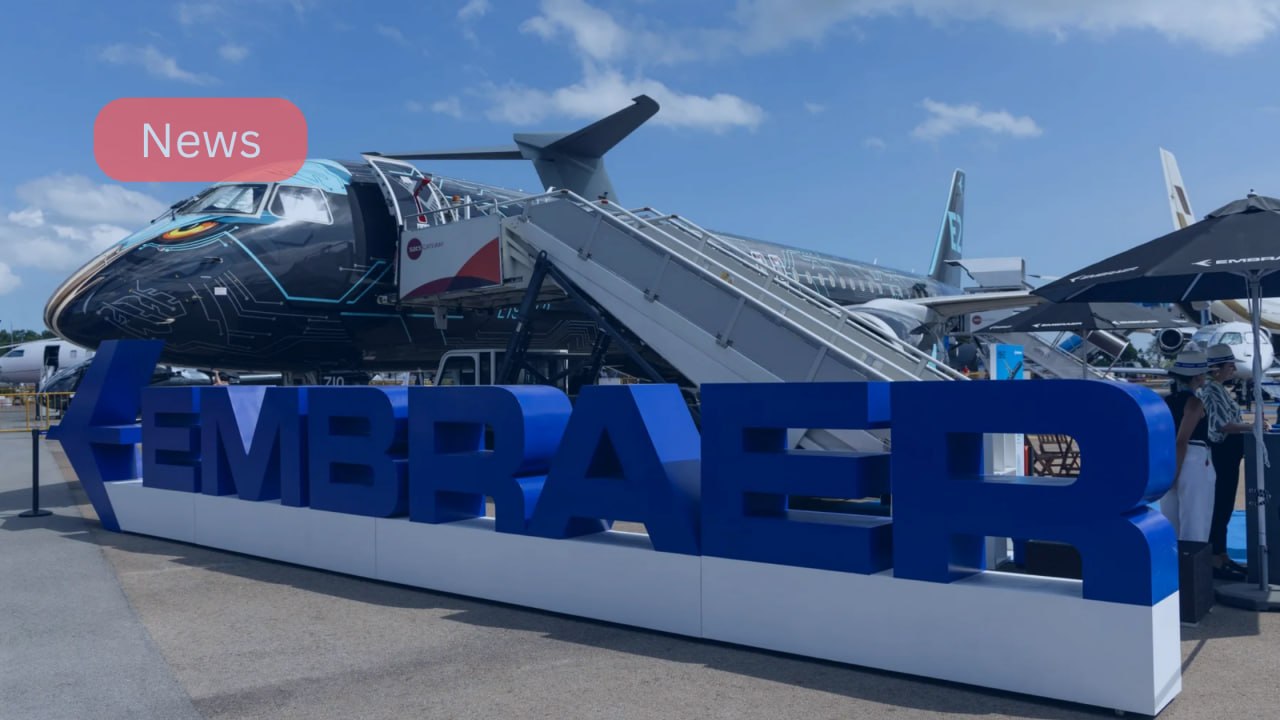

Japan Airlines Co. (JAL) is leaning toward selecting Brazilian manufacturer Embraer SA over European rival Airbus SE for an order of approximately 20 aircraft, according to reporting by Bloomberg journalists Danny Lee, Siddharth Philip, and Leen Al-Rashdan. The decision, which could be finalized as soon as October 2026, marks a pivotal moment for regional aviation news in the Asia-Pacific market.
The potential deal represents a major victory for Embraer’s next-generation E2 jet family. By selecting the E190-E2 over the Airbus A220-100, Japan’s flag carrier would deepen its long-standing operational partnership with the Brazilian airframer while delivering a notable competitive blow to Airbus’s small single-aisle program.
Market Dynamics Driving the JAL Fleet Renewal
Japan Airlines is seeking to modernize its regional fleet operated by subsidiary J-Air. The regional carrier manages feeder services across Japan’s domestic network, connecting secondary airports with primary hubs at Tokyo Haneda and Osaka Itami.
J-Air currently operates a fleet of 18 Embraer 170s and 14 Embraer 190s. The operational familiarity with the E-Jet family provides Embraer with a distinct advantage. Pilot transition training, ground support equipment, and existing maintenance infrastructure significantly reduce the total cost of ownership compared to introducing an entirely new type like the Airbus A220.
Current J-Air Regional Fleet Composition:
├── Embraer E170: 18 aircraft (76 seats)
└── Embraer E190: 14 aircraft (95 seats)
Embraer E2 vs. Airbus A220: The Battle for Under-150-Seat Aircraft
The competition between the Embraer E190-E2 and the Airbus A220-100 highlights a strategic divide in regional aircraft sizing.
| Feature / Metric | Embraer E190-E2 | Airbus A220-100 |
| Typical Seating | 97 seats (2-class) | 120 seats (2-class) |
| Engine Choice | Pratt & Whitney PW1900G | Pratt & Whitney PW1500G |
| Cabin Layout | 2-2 seating (No middle seat) | 2-3 seating |
| Target Role | Lower-density domestic feeder | High-density regional & short-haul |
While the Airbus A220 offers greater passenger capacity and longer range, the E190-E2 provides optimal economics for thin regional routes where frequency matters more than total seat count. Furthermore, both aircraft utilize Pratt & Whitney Geared Turbofan engines, making fuel efficiency and trip-cost calculations central to JAL’s fleet selection.
Regional Aviation Trends and Global Supply Chain Impact
The impending fleet decision reflects broader recovery trends across Asian regional aviation news. As passenger demand stabilizes across domestic Japanese routes, airlines are prioritizing right-sized aircraft to maximize yield and reduce carbon emissions. International Civil Aviation Organization (ICAO) standards on noise and carbon emissions also favor these modern, low-emission turbofans.
Recent developments across regional markets include:
- Commercial Momentum: Embraer has recently secured key E2 orders and commitments from international carriers, expanding its footprint in Europe and Asia.
- Maintenance Continuity: JAL recently extended its Pool Program support agreement with Embraer for its existing 32 E-Jets, ensuring uninterrupted component supply while evaluating the E2.
- Competitive Pressures: Airbus continues to secure large narrowbody orders globally, but face-offs in the 100-seat segment remain intensely contested.
Industry Outlook: What’s Next for JAL and Embraer?
A formal announcement from Japan Airlines is anticipated during the fourth quarter of 2026. If confirmed, delivery schedules for the 20 new regional jets would likely begin in late 2027 or early 2028, aligning with J-Air’s planned phase-out of older first-generation E170s.
For Embraer, locking in JAL reinforces its stronghold in Japan’s regional market. For Airbus, losing the bid highlights the challenges of competing against established fleet synergies in sub-100-seat regional networks.







