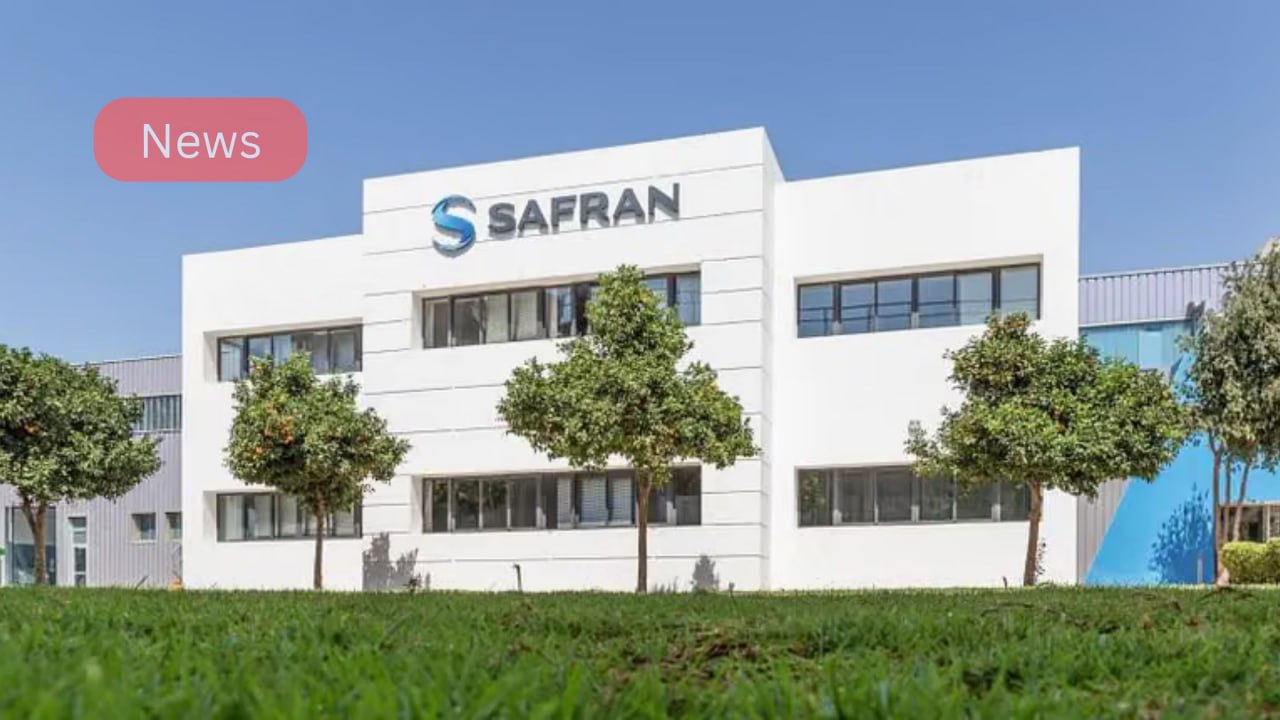

TEMARA, Morocco — Global aerospace systems supplier Safran has inaugurated a major 5,700-square-meter facility extension in Aïn Atiq, Témara. The strategic expansion solidifies Morocco aerospace manufacturing as a linchpin of international civil aviation supply chains. According to reporting by Business Insider Africa journalist Chinedu Okafor, the French aerospace giant is expanding production to meet surging global narrowbody aircraft delivery commitments.
The development highlights Morocco’s rapid transformation from low-cost component supplier into an integrated aerospace powerhouse. Over the past two decades, North Africa has positioned itself as an essential nearshoring hub for European prime contractors. This expansion addresses chronic capacity bottlenecks in global commercial aviation production.
Primary Keyword: Morocco aerospace manufacturing
Supporting Keywords: aviation supply chain, aircraft equipment company, commercial aircraft production, African aerospace hub
Scaling Up Commercial Aircraft Production Capacity
The newly expanded facility brings Safran Electrical & Power’s total manufacturing footprint at the Témara site to 31,400 square meters. The French firm, widely recognized as the world’s second-largest aircraft equipment company, commemorated 20 years of industrial operations in the Kingdom during the opening ceremony.
Morocco’s Minister of Industry and Trade, Ryad Mezzour, attended the ribbon-cutting event alongside Safran executive leadership. Industry officials confirmed that the site will generate approximately two million operational production hours by the end of 2026.
The physical plant expansion targets the following industrial milestones:
- Footprint: Addition of 5,700 square meters of specialized clean manufacturing space.
Business Insider Africa - Workforce Growth: 400 new skilled manufacturing jobs added to the current 1,610-person workforce.
Business Insider Africa - Manufacturing Output: Annual production volume reaching roughly 93,000 electrical wiring harness assemblies.
- Program Support: Direct electrical wiring harness deliveries for platforms such as the Airbus A320 and A350 widebody jetliners.
Aviation News Online
Wiring harnesses function as the central nervous system of modern jetliners. As planemakers accelerate commercial aircraft production to clear historic order backlogs, Tier-1 aerospace suppliers depend heavily on efficient, nearshore manufacturing nodes.
Strengthening the Aviation Supply Chain Against Global Bottlenecks
International airlines and airframers face severe delivery delays caused by post-pandemic material shortages and workforce deficits. Expanding Moroccan operations strengthens the broader aviation supply chain by providing dependable output within three hours’ flight time of major European final assembly lines in Toulouse and Hamburg.
Morocco’s aerospace cluster, centered around Nouaceur and Casablanca, includes more than 140 operational companies spanning aerostructures, electronics, composites, and maintenance. The African Development Bank has noted that targeted national industrial policies, tariff-free export zones, and purpose-built vocational academies make Morocco an exceptionally attractive manufacturing destination.
Major global primes have taken notice:
- Airbus: Finalizing plans for a third dedicated factory in Morocco alongside expanded helicopter maintenance support.
Business Insider Africa - Safran Group: Advancing adjacent investments, including a €280 million landing gear facility and a planned €350 million aircraft-engine assembly and maintenance hub.
Business Insider Africa - Boeing: Maintaining joint ventures focused on wire bundle fabrication through MATIS Aerospace.
These facilities directly link local industrial capacity to global commercial aircraft programs rather than restricting operations to regional African carriers.
Strategic Significance for the African Aerospace Hub
Morocco’s industrial rise represents a wider geopolitical and economic shift across the continent. While South Africa and Egypt maintain larger domestic industrial bases by raw manufacturing value added, Morocco has become the premier African aerospace hub in high-technology exports and foreign direct investment.
Under Royal Vision industrial development initiatives, Moroccan authorities prioritized aeronautics as an export growth engine. The country offers international original equipment manufacturers (OEMs) seamless logistics via Tanger Med port infrastructure, robust bilateral trade frameworks with the European Union, and competitive operating costs.
Crucially, the Témara site demonstrates an exceptional social benchmark for high-tech industry: women constitute approximately 87% of the plant’s skilled manufacturing workforce. This dynamic reflects extensive state investment in technical training institutes such as the Institute of Aeronautical Professions (IMA) near Casablanca.
Industry Outlook: What’s Next for Morocco Aerospace Manufacturing?
The expansion in Témara marks the initial phase of a broader wave of aerospace capital projects set to mature between 2026 and 2030. As the international aviation sector strives to fulfill multi-year order backlogs for fuel-efficient single-aisle aircraft, regional supply chain nodes will assume higher assembly responsibilities.
The industry will focus next on several key benchmarks:
- High-Value Propulsion Assembly: Execution of Safran’s planned commercial aircraft engine maintenance, repair, and overhaul (MRO) facilities capable of handling up to 350 engine units annually by 2030.
- Landing Gear Capabilities: Groundbreaking on advanced landing gear machining centers to supply next-generation narrowbody programs.
- Supply Chain Localization: Transitioning beyond component harness fabrication toward complex system integration and sovereign digital aerospace engineering.
Through continued capital commitment from premier partners like Safran, Morocco aerospace manufacturing is moving steadily up the global value chain. The Kingdom has proven that strategic industrial planning can turn regional manufacturing hubs into critical partners for the future of global aviation.







