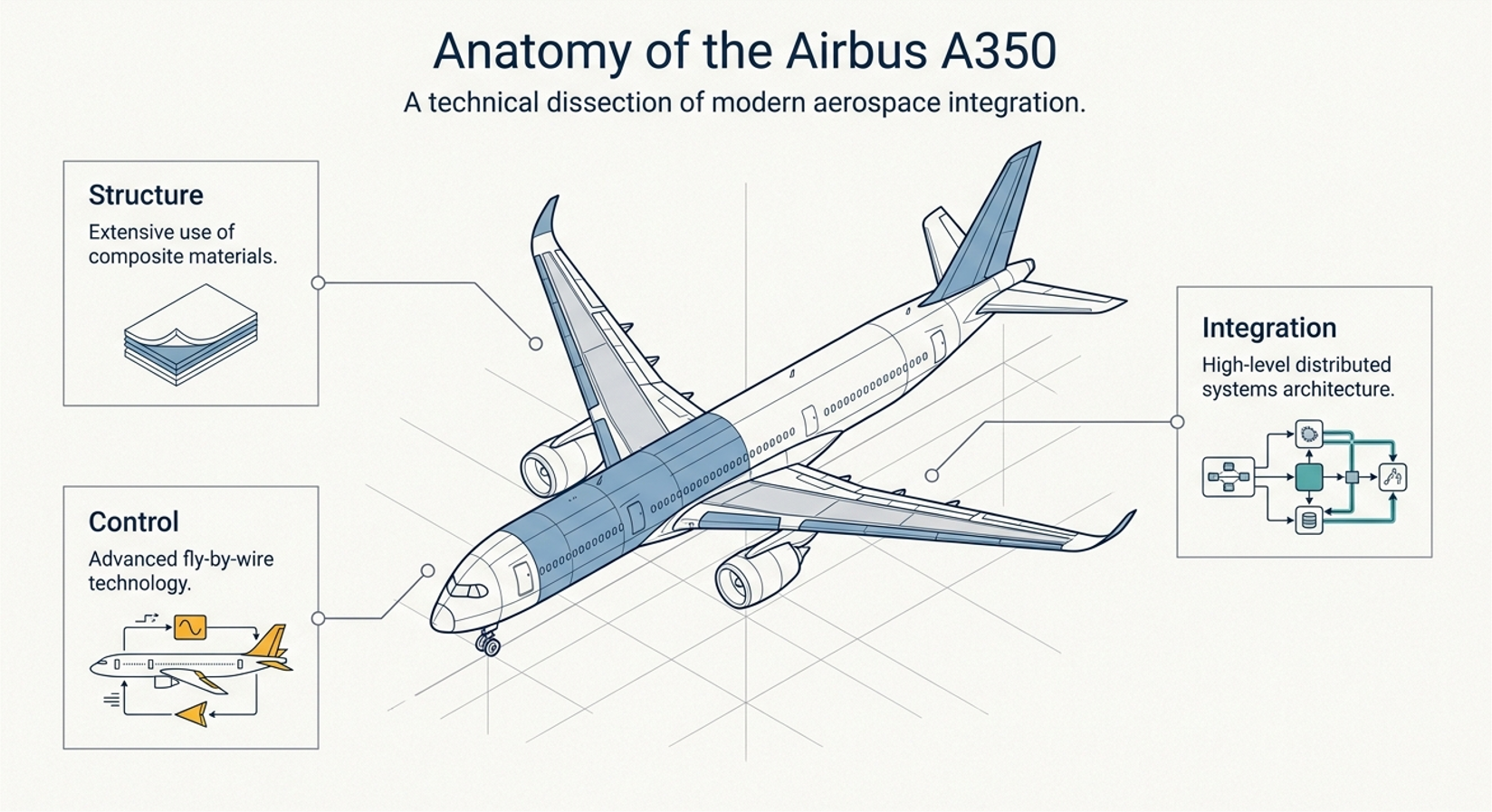

The Airbus A350 is a long-range, wide-body twin-engine aircraft designed with a high level of system integration, extensive use of composite materials, and advanced fly-by-wire technology. Its systems architecture emphasizes efficiency, redundancy, maintainability, and passenger comfort.
1. Aircraft General Architecture
Core concept
The A350 uses a distributed systems architecture in which multiple computers communicate over high-speed digital data networks. Many traditional pneumatic and hydraulic functions have been replaced or supplemented by electrically powered systems, reducing weight and improving fuel efficiency.
Key design principles
Redundancy for safety-critical functions, extensive automation, centralized monitoring and maintenance diagnostics, and modular components to simplify maintenance.
2. Flight Control System
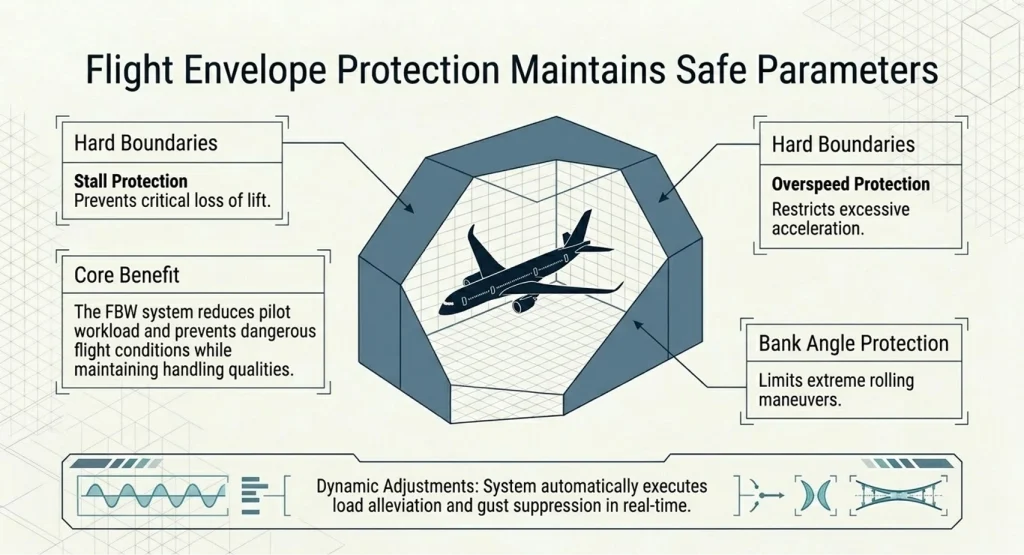
The A350 employs a full-authority digital fly-by-wire (FBW) system. Pilot control inputs are transmitted electrically to flight control computers rather than through mechanical linkages.
Major Components
- Primary Flight Control Computers (PRIMs)
- Secondary Flight Control Computers (SECs)
- Control surfaces: ailerons, elevators, rudder, spoilers, and high-lift devices
Key Functions
- Stability augmentation
- Flight envelope protection (stall, overspeed, excessive bank angle protection)
- Load alleviation and gust suppression
- Automatic trim
Operational Benefit: The FBW system reduces pilot workload and prevents many dangerous flight conditions while maintaining handling qualities across the flight envelope.
3. Electrical Power System
The A350 features a highly electric architecture compared with earlier Airbus models.
Power Sources
- Engine-driven generators
- Auxiliary Power Unit (APU) generator
- Batteries
- Ram Air Turbine (RAT) generator for emergency power
Power Distribution
- AC and DC electrical buses
- Automatic load management
- Essential and emergency buses maintained during failures
Notable Feature
Many systems that traditionally used pneumatic power are electrically driven on the A350, contributing to lower fuel burn and simplified maintenance.
4. Hydraulic System
Hydraulic power is used for high-force applications such as flight controls, landing gear operation, and braking.
System Layout
- Multiple independent hydraulic circuits
- Engine-driven hydraulic pumps
- Electric backup pumps
- Hydraulic reservoirs, filters, and accumulators
Redundancy
The hydraulic architecture is designed so that the loss of one circuit does not result in loss of aircraft control.
5. Fuel System
The fuel system stores, transfers, and supplies fuel to the engines while maintaining aircraft balance.
Main Elements
- Wing tanks
- Center tank
- Fuel pumps
- Crossfeed valves
- Fuel quantity measurement system
Functions
- Fuel supply to engines
- Fuel transfer between tanks
- Center-of-gravity optimization during flight
- Refueling and defueling operations
6. Environmental Control System (ECS)
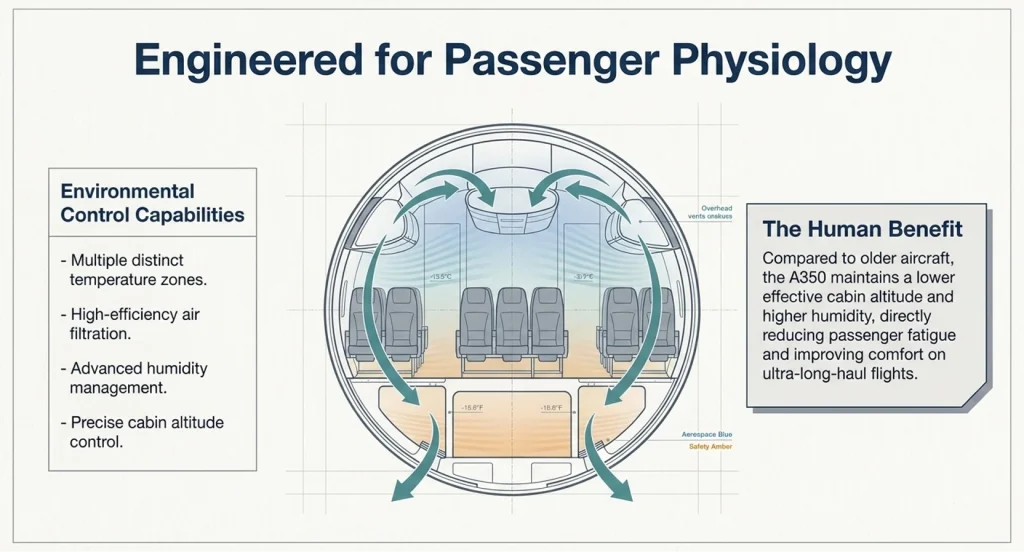
The ECS provides cabin pressurization, ventilation, temperature control, and air quality management.
Features
- Cabin altitude control
- Multiple temperature zones
- High-efficiency air filtration
- Humidity management improvements compared with older aircraft
Passenger Benefits
- Lower cabin altitude
- Reduced fatigue on long flights
- Improved comfort
7. Landing Gear and Braking System
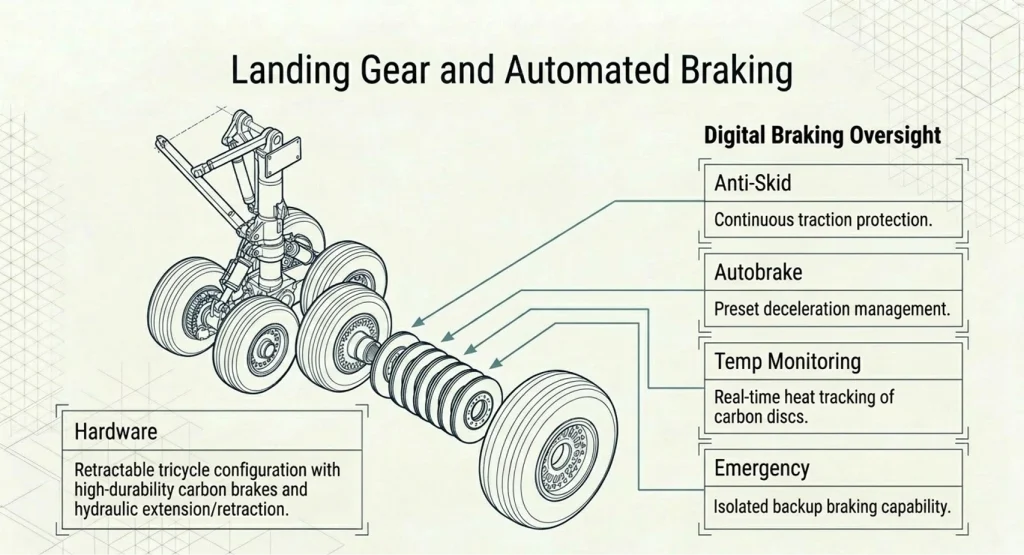
The A350 uses a retractable tricycle landing gear configuration.
Main Components
- Nose landing gear
- Main landing gear assemblies
- Hydraulic retraction/extension system
- Carbon brakes
Braking Features
- Anti-skid protection
- Autobrake system
- Brake temperature monitoring
- Emergency braking capability
8. Avionics and Communication Systems
The A350 cockpit integrates advanced avionics and communication systems.
Key Systems
- Flight Management System (FMS)
- Electronic Flight Instrument System (EFIS)
- Integrated Modular Avionics (IMA)
- VHF, HF, and satellite communications
- Data link communications
Operational Advantages
- Reduced pilot workload
- Enhanced navigation accuracy
- Improved situational awareness
9. Engine and Propulsion System
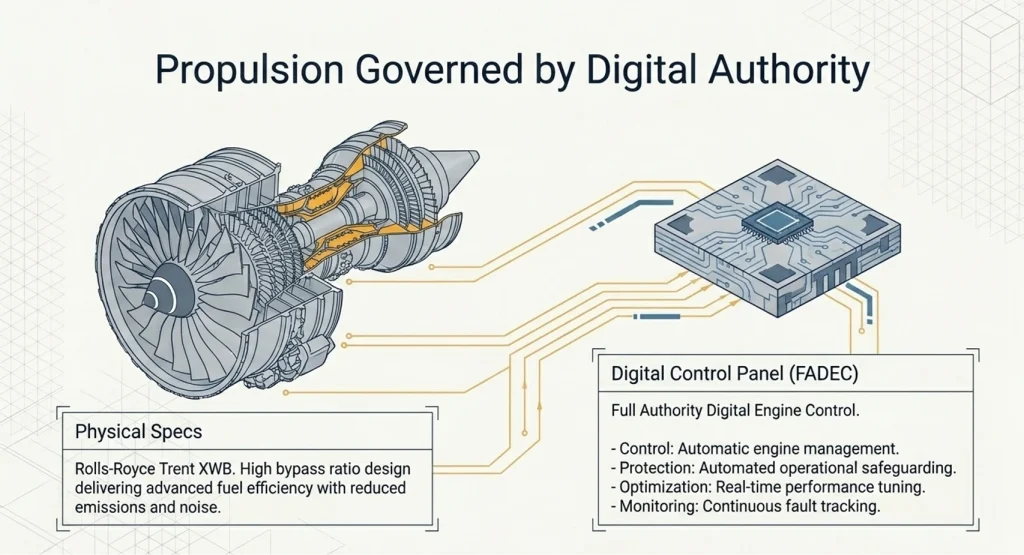
The A350 is powered by Rolls-Royce Trent XWB turbofan engines.
Engine Features
- High bypass ratio
- Full Authority Digital Engine Control (FADEC)
- Advanced fuel efficiency
- Reduced emissions and noise
FADEC Functions
- Automatic engine control
- Engine protection
- Performance optimization
- Fault monitoring
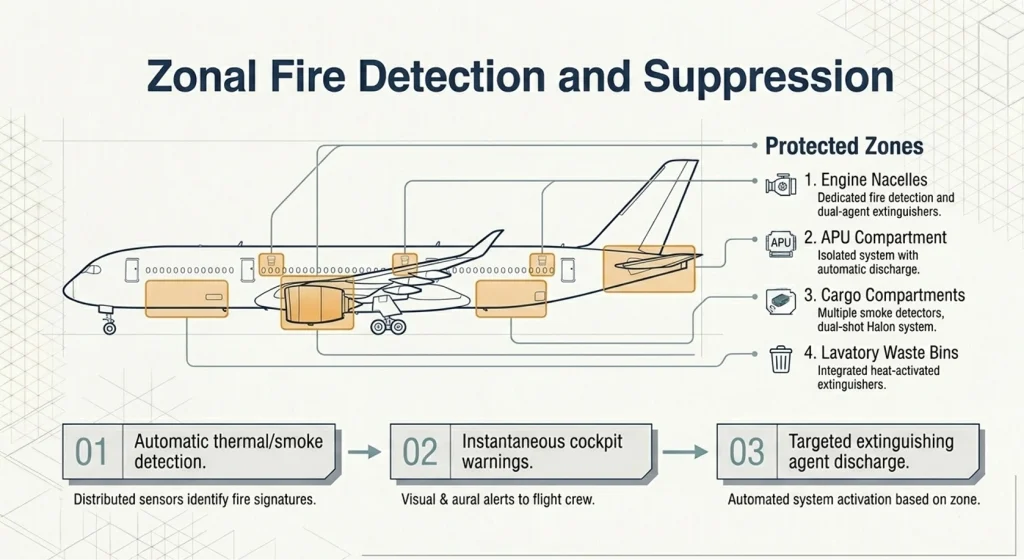
10. Fire Protection System
Fire detection and suppression systems are installed in critical areas.
Protected Zones
- Engine nacelles
- APU compartment
- Cargo compartments
- Lavatory waste bins
Capabilities
- Automatic detection
- Cockpit warnings
- Extinguishing agent discharge
11. Maintenance and Monitoring Systems
The A350 incorporates advanced health monitoring capabilities.
Functions
- Built-in test equipment (BITE)
- Fault recording
- Predictive maintenance support
- Data transmission to maintenance centers
Benefit
These systems help reduce unscheduled maintenance and improve aircraft availability.
System Integration and Safety Philosophy
A defining characteristic of the A350 is the high level of integration between systems. Flight controls, avionics, electrical power, and monitoring systems share data continuously, enabling:
- Automatic fault detection: The aircraft can identify many system anomalies without pilot intervention.
- Graceful degradation: If a component fails, backup systems maintain essential functionality.
- Enhanced operational efficiency: Automation reduces workload and optimizes aircraft performance.
The Airbus A350 represents a modern aircraft systems architecture focused on efficiency, reliability, and safety. Its fly-by-wire controls, highly electric design, integrated avionics, advanced environmental systems, and predictive maintenance capabilities distinguish it from earlier generations of wide-body aircraft. These systems work together to provide lower operating costs, improved passenger comfort, and robust operational resilience for long-haul airline operations.







