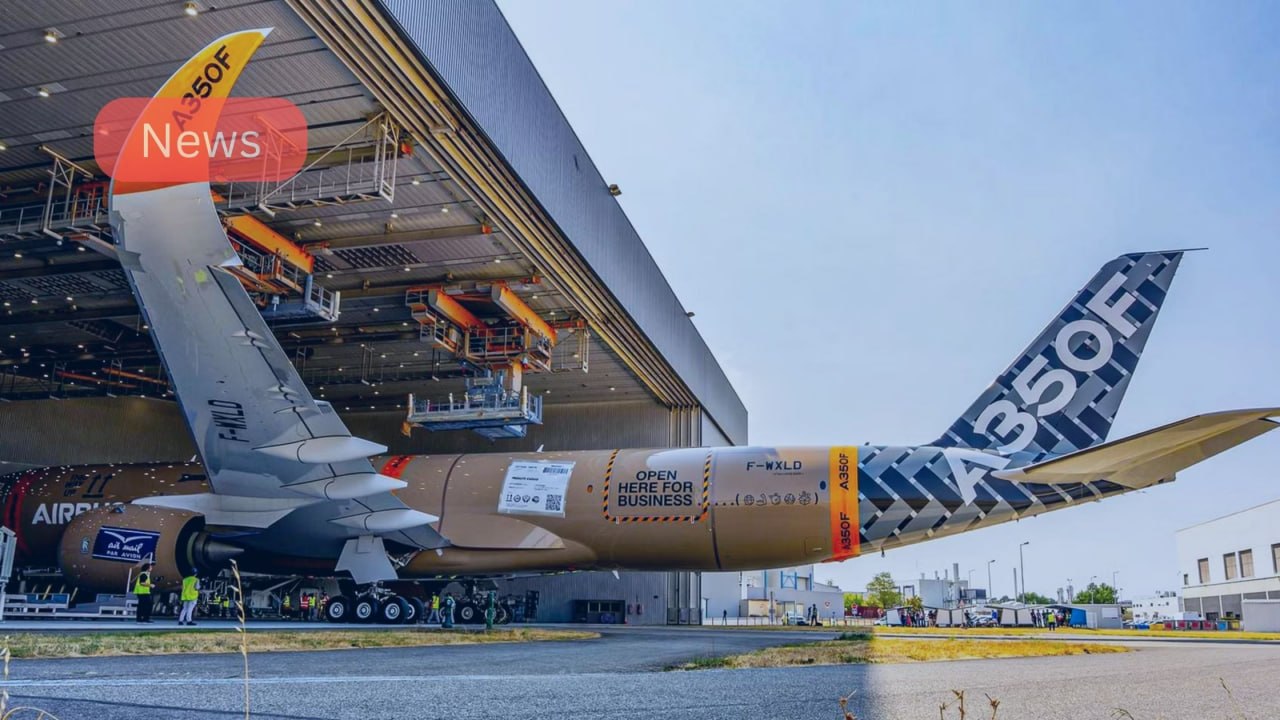

Aerospace giant Airbus officially launched its next-generation A350F cargo aircraft into the skies for the first time from Toulouse-Blagnac Airport. The milestone flight marks the beginning of an extensive flight-testing campaign aimed at certifying the manufacturer’s newest long-haul freighter. Aviation journalist Tom Boon reported on the preview and scheduled maiden flight for Simple Flying, highlighting the global industry attention surrounding the aircraft’s distinctive “Flying Parcel” livery.
The prototype aircraft, registered as F-WXLD (MSN700), lifted off from Runway 14R at Toulouse under the power of two Rolls-Royce Trent XWB-97 engines. The inaugural flight lasted 4 hours and 14 minutes, executing a series of tests across southern France before returning to Toulouse for a low pass and safe touchdown. Over 17,000 aviation enthusiasts tracked the flight live via Flightradar24 as the widebody cargo jet demonstrated its structural handling.
The launch of the A350F comes at a critical juncture for global logistics and commercial air freight operations. With expanding e-commerce demand and evolving environmental standards, major cargo operators are seeking high-efficiency options to replace aging long-haul fleets.
Industry Impact and Technical Specifications
Engineered around a lightweight carbon-composite airframe, the A350F offers significant weight and fuel savings over previous-generation freighters. The aircraft features a payload capacity of up to 111 tonnes and an operational range of 4,700 nautical miles. These parameters allow seamless non-stop cargo transits across key global trade corridors, such as Hong Kong to Anchorage.
Furthermore, the freighter incorporates the largest main-deck cargo door in its class. With a cutout width of 175 inches, the main door allows easier handling of large industrial items and standardized shipping pallets.
Airbus designed the A350F to meet the International Civil Aviation Organization’s (ICAO) enhanced environmental rules. By achieving up to 40% lower fuel burn and carbon emissions compared to older freighters in service, the type provides cargo carriers a compliant solution ahead of stricter environmental deadlines.
Market Positioning in Middle East Aviation News and Global Trade
The entry of the Airbus A350F directly targets the heavy-freighter market long dominated by competitors. Airbus has already secured more than 100 firm orders and commitments from major global carriers and leasing entities, including Etihad Airways, Martinair, Singapore Airlines, and AviLease.
According to International Air Transport Association (IATA) industry data, global air cargo demand continues to reflect steady growth driven by cross-border express e-commerce and high-tech supply chains. The introduction of modern freighters plays a pivotal role in maintaining supply chain resilience while meeting net-zero carbon initiatives.
What’s Next for the Airbus A350F Program
Following its successful first flight, the A350F prototype enters an intensive flight-test campaign. Airbus engineers will evaluate structural limits, avionics, flight control laws, and environmental control systems across hundreds of test hours.
Commercial deliveries are projected to begin in the second half of 2027 or early 2028. As regulatory bodies like EASA and the FAA evaluate the aircraft, the A350F represents a major shift in modernizing air freight transport for sustainable global commerce.







