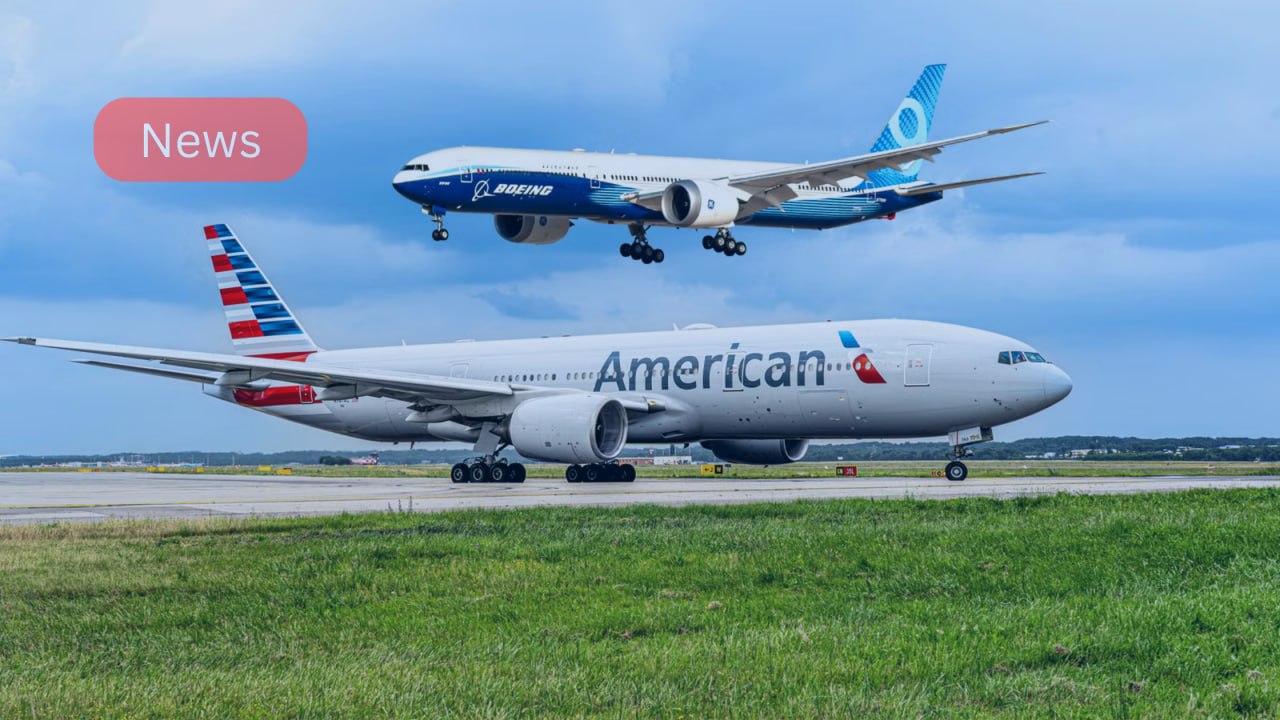

According to aviation journalist Jasper Yu-Dawidowicz of Simple Flying, American Airlines has reached a critical crossroad in its long-term fleet planning. As the last major US legacy carrier without a commitment to a next-generation widebody larger than the Boeing 787-9, Fort Worth-based American Airlines is actively evaluating its future long-haul strategy. With its legacy Boeing 777-200ER fleet nearing retirement age, the airline has initiated a broad evaluation process that has drawn competitive proposals from both Boeing and Airbus.
The operational backdrop for this decision intensified following reports that an American Airlines flight test pilot participated in evaluation flights of the Boeing 777-9 as part of the aircraft’s ongoing certification testing. While OEM pilot evaluations are standard human-factors protocol rather than evidence of a signed transaction, the event underscores Boeing’s aggressive effort to secure a flagship domestic customer for its delayed 777X program.
American Airlines currently operates an all-Boeing widebody fleet comprising 67 Triple Sevens and 70 Dreamliners. The core replacement challenge centers on the 47 aging Boeing 777-200ERs, which average over 25 years of service. During the early stages of the COVID-19 pandemic, American simplified its long-haul operations by retiring its entire fleet of Airbus A330s and Boeing 767s, leaning heavily on incoming 787 deliveries to streamline maintenance and operations.
However, the impending retirement of the 777-200ER and eventual phase-out of the larger 777-300ER leave a clear gap in high-capacity widebody coverage. While the 787-9 serves as the backbone of American’s current international network, its 244-seat premium-heavy configuration offers significantly less payload volume than larger widebody jets.
International Route Strategy Dictates Fleet Scale
An American Airlines widebody fleet order must align directly with the carrier’s international route network. Compared to legacy competitors Delta Air Lines and United Airlines, American maintains a more focused international footprint centered primarily on Latin America via its Miami and Dallas/Fort Worth hubs, alongside select high-density European routes such as London Heathrow.
In the Transpacific market, American serves only a handful of key hubs, including Tokyo, Seoul, Shanghai, Sydney, Auckland, and Brisbane. In contrast, United Airlines operates an extensive Pacific network serving nearly 30 Asian destinations. Because American relies heavily on joint-venture partner networks like International Airlines Group (IAG) to feed its international connections, its requirement for ultra-large aircraft like the 777-9 or Airbus A350-1000 remains far more limited.
Industry analysts note that while the 777X could serve dense trunk routes between New York JFK/London Heathrow or Dallas/Tokyo, smaller modern widebodies or incremental orders for the Boeing 787-10 provide greater operating flexibility and yield protection.
Regulatory Standards and Technical Context
Widebody order decisions are heavily governed by International Civil Aviation Organization (ICAO) environmental standards and International Air Transport Association (IATA) net-zero carbon targets. Next-generation aircraft like the 787 and 777X incorporate composite airframes and advanced engine architectures such as the GE9X that reduce fuel burn and carbon emissions by 15% to 25% compared to legacy aircraft.
As airlines balance capital expenditure against stringent decarbonization mandates, total cost of ownership and delivery reliability remain top priorities for fleet planners.
Industry Outlook: What’s Next for American Airlines?
The decision facing American Airlines leadership involves balancing unit cost efficiency against seat capacity constraints. While a commitment to the Boeing 777X would signal a major vote of confidence in Boeing’s flagship program, a larger order for Boeing 787-10s or Airbus A330neos would offer immediate crew commonality, reduced operational risk, and lower acquisition costs.