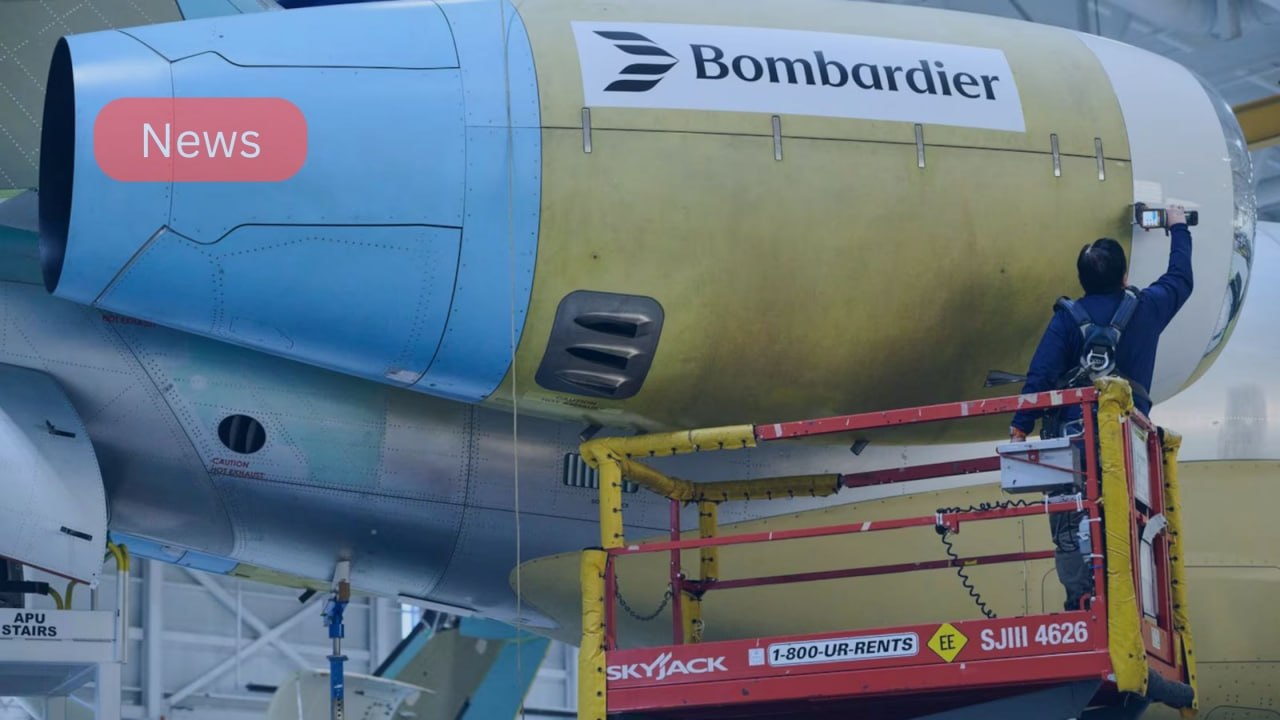

Bombardier has agreed to acquire the MHI Canada Aerospace facility in Mississauga, Ontario, in a move that will bring an important aerospace manufacturing operation inside the Canadian aircraft manufacturer’s business. The agreement covers the facility and approximately 750 employees, subject to regulatory approvals and customary closing conditions.
The deal was reported September 1 by The Canadian Press, published by BNN Bloomberg. The announcement was also independently reported by Reuters and confirmed by Mitsubishi Heavy Industries the following day.
The facility belongs to MHI Canada Aerospace (MHICA), Mitsubishi Heavy Industries’ Canadian aerospace operation. MHI’s own company information says its Mississauga operation includes a 270,000-square-foot manufacturing and assembly facility and a separate 70,000-square-foot logistics centre.
The operation has supported Bombardier aircraft programs for years. Its activities include aircraft-structure assembly, including wing and fuselage-related work, systems installation and flight-control assembly.
Reuters reported that the facility plays an important role in manufacturing wings for Bombardier’s Global 5500 and 6500 business jets.
Why Bombardier Is Bringing Production In-House
Bombardier described the acquisition as part of its longer-term strategy to strengthen internal manufacturing capabilities and supply-chain resilience.
David Murray, Bombardier’s executive vice-president for manufacturing, supply-chain execution and operational excellence, said the transaction would deepen the company’s manufacturing expertise and support its ability to respond to customer demand.
The acquisition therefore represents more than a change in ownership. It moves an existing supplier operation into Bombardier’s own manufacturing structure.
The potential benefits identified by the companies include:
- Greater control over aerostructure manufacturing.
- Additional in-house production capacity.
- Continued employment for approximately 750 aerospace workers.
- Greater integration between aircraft assembly and component manufacturing.
- Continued investment in Canada’s aerospace manufacturing base.
MHI Canada Aerospace and Canada’s Aviation Industry
MHICA has a long history in the Canadian aerospace sector. MHI says the operation began with work supporting Bombardier aircraft programs in the 1990s before MHICA was formally incorporated in Ontario in 2006.
The company later expanded its Mississauga operations and transferred additional aircraft-structure assembly work to Canada. Its supply-chain operation also works with suppliers across North America.
That history gives the Mississauga aerospace facility significance beyond the acquisition itself. The transaction preserves an established manufacturing operation while changing the relationship between the manufacturer and a major supplier.
What the Sources Confirm
The central facts in the original report have received multiple confirmations.
The September 1 announcement from Bombardier and MHI stated that the companies had reached an agreement for Bombardier to acquire MHICA assets. It also confirmed that the transaction was expected to close later in 2026, subject to regulatory approvals and customary closing conditions.
MHI repeated the announcement on September 2 and said it would provide transitional support after closing to help maintain operational continuity.
Reuters independently reported the transaction on September 1 and confirmed that the financial terms had not been disclosed.
The Canadian Press report also noted that Bombardier had not disclosed the purchase price.
This means the acquisition’s strategic rationale is documented, but its financial value cannot currently be assessed from publicly disclosed transaction terms.
Aviation Manufacturing and Supply-Chain Context
Aircraft manufacturers increasingly depend on complex international supply chains for major structures, systems and components. Bringing selected capabilities inside the manufacturer can give an aircraft company greater direct control over production, quality, scheduling and supplier coordination.
In this case, Bombardier already had a longstanding relationship with the Mississauga operation. MHI’s facility was producing structures for Bombardier aircraft before the proposed ownership change.
The transaction therefore differs from establishing an entirely new factory. It involves the transfer of an established aerospace manufacturing operation and workforce into Bombardier.
The agreement also comes against the background of Bombardier’s broader business-jet strategy. The Canadian Press reported that CEO Éric Martel had discussed potential acquisitions in aircraft services and defence in August 2026.
Regulatory Approval and Closing Timeline
The acquisition has not yet been completed.
The announced timeline is:
- September 1, 2026: Bombardier and MHI announce the acquisition agreement.
- September 1, 2026: The Canadian Press publishes its report through outlets including BNN Bloomberg.
- September 2, 2026: MHI publishes its confirmation of the transaction.
- Later in 2026: The companies expect the transaction to close, subject to regulatory approvals and other closing conditions.
Neither Bombardier nor MHI disclosed the transaction value.
Industry Outlook: What Happens Next?
The immediate issue is the completion of the regulatory and closing process. Until that process is complete, the assets remain subject to the existing ownership structure.
If the transaction closes as announced, Bombardier will absorb approximately 750 MHICA employees and gain direct control of the acquired aerostructure manufacturing capabilities. MHI has said it will support the transition to help maintain continuity for employees and aircraft programs.
For the Canadian aerospace industry, the deal is notable because it preserves a substantial aircraft-structure manufacturing operation in Mississauga while bringing that operation directly into Bombardier’s production organization.
The transaction also illustrates a broader manufacturing strategy: aircraft manufacturers can use vertical integration to bring strategically important production capabilities closer to their core operations. In Bombardier’s case, the final impact will become clearer once the transaction closes and the companies disclose more information about its implementation.







