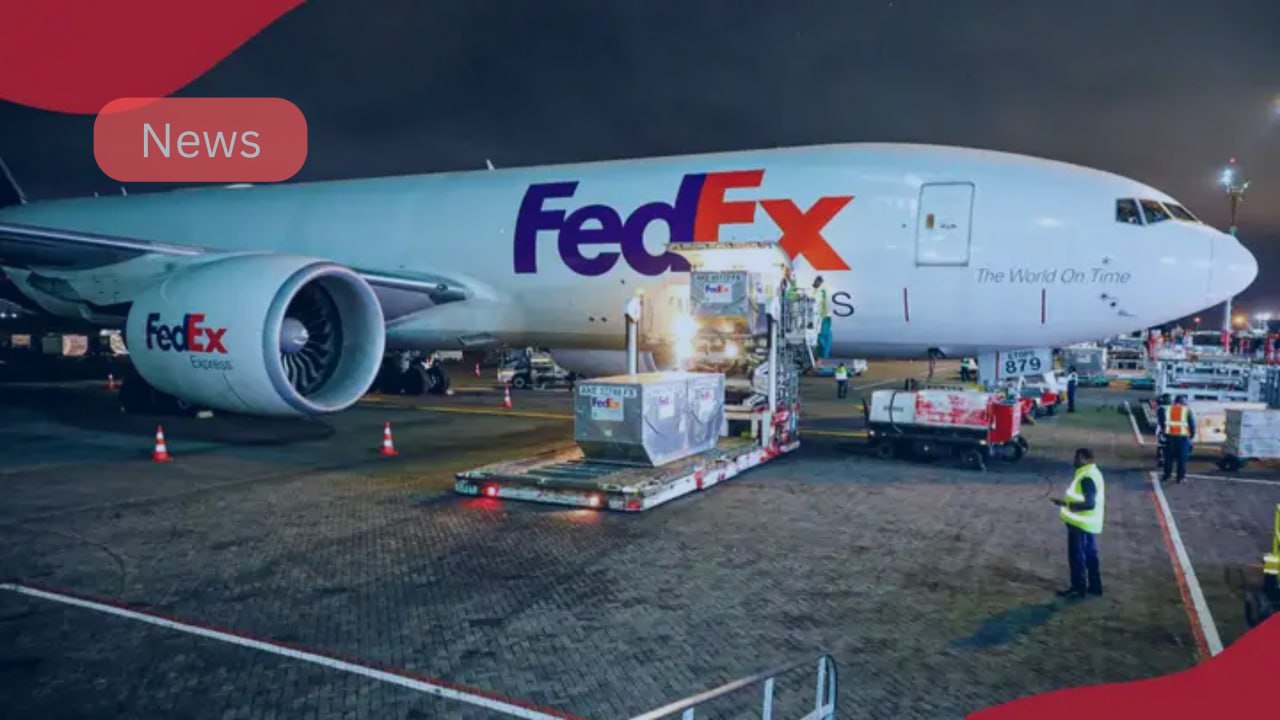

Kenya Airways has secured a new cargo operations agreement with FedEx in a move that strengthens Nairobi’s position in the East African aviation logistics market.
According to business journalist Elijah Ntongai of Tuko.co.ke, FedEx selected Kenya Airways as its official ground handling partner at Jomo Kenyatta International Airport (JKIA) in Nairobi. The partnership was announced on May 15, 2026.
The agreement marks the first time the American logistics company has chosen Kenya Airways for ground handling operations in Kenya. Under the arrangement, Kenya Airways will manage cargo support services for FedEx through its subsidiary, Kenya Airfreight Handling Limited (KAHL).
The deal comes as African air cargo demand continues to grow due to e-commerce expansion, pharmaceutical logistics, and rising trade under the African Continental Free Trade Area (AfCFTA).
What the FedEx–Kenya Airways Agreement Includes
The Kenya Airways FedEx ground handling partnership focuses on cargo operations at JKIA, one of Africa’s busiest freight gateways.
Kenya Airways will oversee:
- Import cargo handling
- Export freight processing
- Transit cargo coordination
- Perishable goods logistics
- Pharmaceutical shipment handling
Industry reports indicate the partnership will also support faster cargo turnaround and improve supply chain reliability for international shipments moving through Nairobi.
Kenya Airways Acting Group CEO Capt. George Kamal described the agreement as a validation of the airline’s operational standards.
He said the partnership reinforces Nairobi’s role as a logistics link between Africa, Europe, Asia, the Middle East, and North America.
Why JKIA Matters in African Aviation Logistics
JKIA has become one of the most strategically important cargo airports in East Africa. Kenya exports large volumes of:
- Fresh flowers
- Vegetables
- Pharmaceuticals
- High-value perishables
These sectors depend heavily on fast and temperature-controlled air freight systems.
The International Air Transport Association (IATA) has repeatedly highlighted the importance of reliable cargo infrastructure in supporting African trade competitiveness. Nairobi’s geographic location also gives airlines efficient access to regional and intercontinental routes.
Kenya Airways already operates cargo and warehousing services through KAHL, which specializes in handling sensitive shipments requiring cold-chain logistics.
African Aviation Logistics Growth Continues
The Kenya Airways FedEx ground handling partnership reflects wider changes in African aviation logistics.
Several trends are driving cargo growth across the continent:
E-commerce Expansion
Online retail demand continues to increase express shipment volumes across Africa.
AfCFTA Trade Integration
The African Continental Free Trade Area aims to improve cross-border trade flows and reduce barriers across African economies.
Pharmaceutical Distribution
Healthcare supply chains increasingly require reliable air cargo networks with temperature-controlled handling.
Perishable Export Markets
East African agricultural exports depend on rapid cargo movement to Europe and Asia.
Industry publications including CAPA and LogUpdate Africa independently confirmed the partnership announcement and noted its strategic significance for regional cargo connectivity.
Industry Outlook for Kenya Airways and FedEx
The agreement could help Kenya Airways strengthen its non-passenger revenue streams at a time when airlines globally are diversifying cargo operations.
Ground handling contracts provide airlines with additional operational income while improving airport network influence.
For FedEx, partnering with a locally established airline gives the company direct access to existing infrastructure and regional operational expertise at JKIA.
However, analysts will likely watch several factors closely:
- Cargo throughput growth
- Operational efficiency improvements
- Future expansion into regional cargo routes
- Competition from Ethiopian Airlines and Gulf carriers
Nairobi’s ambition to become Africa’s leading cargo hub remains competitive, particularly against Addis Ababa, Doha, and Dubai.
What’s Next for East African Air Cargo?
The Kenya Airways FedEx ground handling partnership highlights how global logistics companies are expanding their African cargo presence.
If cargo demand continues to rise, additional investments in:
- Cold-chain infrastructure
- Airport warehousing
- Digital cargo tracking
- Regional freight integration
could further strengthen East Africa’s role in international aviation logistics.
As AfCFTA implementation advances, airports such as JKIA may become increasingly important gateways for continental trade and time-sensitive cargo movement.
Sources
- Tuko.co.ke original report
- Primary source article by Elijah Ntongai.
- Provided the original reporting, executive quotes, and partnership details.
- CAPA – Centre for Aviation coverage
- Industry-specialized aviation intelligence source.
- Used to independently confirm the FedEx–Kenya Airways ground handling agreement.
- LogUpdate Africa report
- Aviation and logistics trade publication focused on African cargo markets.
- Used to validate operational scope and regional cargo implications.







