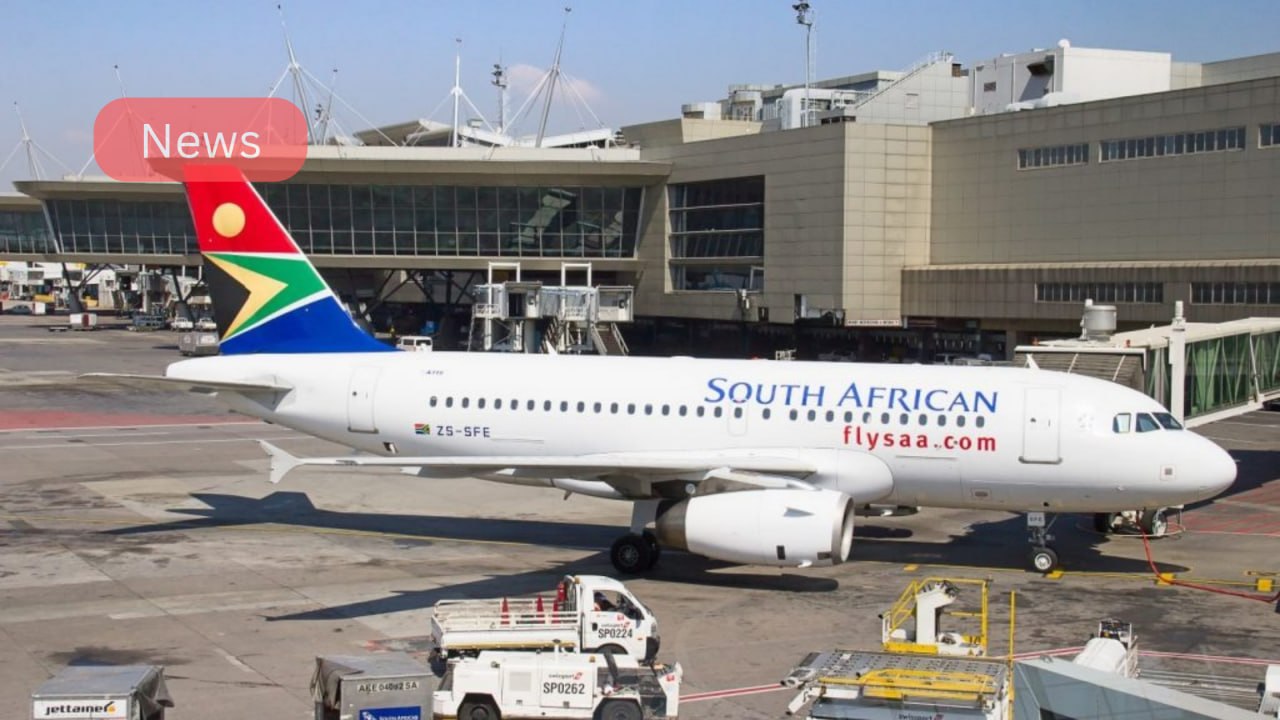

South African Airways (SAA) has secured a critical financial lifeline, raising fresh questions about the national carrier’s long-term independence. According to a recent report by financial publisher Moneyweb, the National Treasury officially provided a South African Airways R1 billion guarantee to support the airline’s working capital requirements. This intervention comes just a year after government officials declared the airline financially independent.
Finance Minister Enoch Godongwana disclosed this arrangement during the Medium Term Budget Policy Statement (MTBPS) in late October 2026. The guarantee was quietly approved in August 2026 to help the airline absorb severe operational pressures. Rising global jet fuel costs and geopolitical tensions have severely strained the carrier’s balance sheet. While this move does not involve an immediate cash transfer, it exposes South African taxpayers to significant liability if the airline defaults.
The Mechanics of the South African Airways R1 Billion Guarantee
The distinction between a direct cash injection and a debt guarantee is vital in aviation financial restructuring. A guarantee allows an airline to leverage the government’s credit rating to secure loans from commercial banks.
If SAA generates enough revenue to service this new debt, the state pays nothing. However, history paints a concerning picture for this state-owned airline bailout. If SAA fails to meet its financial obligations, the R1 billion liability falls directly on the National Treasury.
National Treasury Director-General Duncan Pieterse confirmed the arrangement. He emphasized that finding a strategic equity partner remains crucial. “SAA has already received around ZAR 50 billion in bailouts over the years,” Pieterse noted recently. “The reason the strategic equity partner becomes important is so that we can permanently mitigate against that fiscal risk.”
The Impact of Jet Fuel Prices on African Aviation News
Global macroeconomic factors heavily influenced SAA’s current liquidity crisis. Jet fuel remains one of the largest single expenses for any commercial carrier.
- Fuel Price Shocks: Disruptions around the Strait of Hormuz and ongoing geopolitical conflicts have kept fuel costs volatile.
- Currency Fluctuations: Because jet fuel is priced in US dollars, emerging market airlines face compounded pressures when local currencies weaken.
- IATA Warnings: The International Air Transport Association (IATA) continuously warns that high operating costs and steep taxes severely limit the profitability of African airlines.
SAA is not immune to these systemic industry challenges. Despite reporting a R30 million profit for the 2024/25 financial year, analysts attribute much of this gain to the sale of valuable Heathrow Airport landing slots rather than sustainable ticket sales.
A Timeline of SAA’s Financial Struggles
To understand the weight of the latest guarantee, one must look at SAA’s historical reliance on the state:
- 2007–2019: SAA receives roughly R22.8 billion in direct state recapitalization.
- December 2019: The airline enters voluntary business rescue following years of mismanagement.
- 2020–2021: Treasury allocates an additional R10.5 billion to implement the business rescue plan.
- Early 2024: A highly anticipated privatization deal with the Takatso Consortium collapses. SAA returns to 100% state ownership.
- August 2026: Treasury quietly issues the new R1 billion debt guarantee to stabilize working capital.
Industry Outlook: What’s Next for SAA?
The search for a private investor is back to square one. Transport Minister Barbara Creecy recently maintained that SAA is currently self-funding its fleet growth. However, aviation industry experts remain deeply skeptical.
Dr. Guy Leitch, an aviation analyst, warned that weaker travel demand and elevated fuel costs constrain the airline’s route expansion. Without a credible equity investor to provide commercial expertise and capital, SAA remains highly vulnerable to external economic shocks.
Ultimately, the airline must prove it can operate profitably in a fiercely competitive market. If SAA cannot manage its latest debt obligations, this R1 billion guarantee will inevitably transition into yet another taxpayer-funded bailout.







